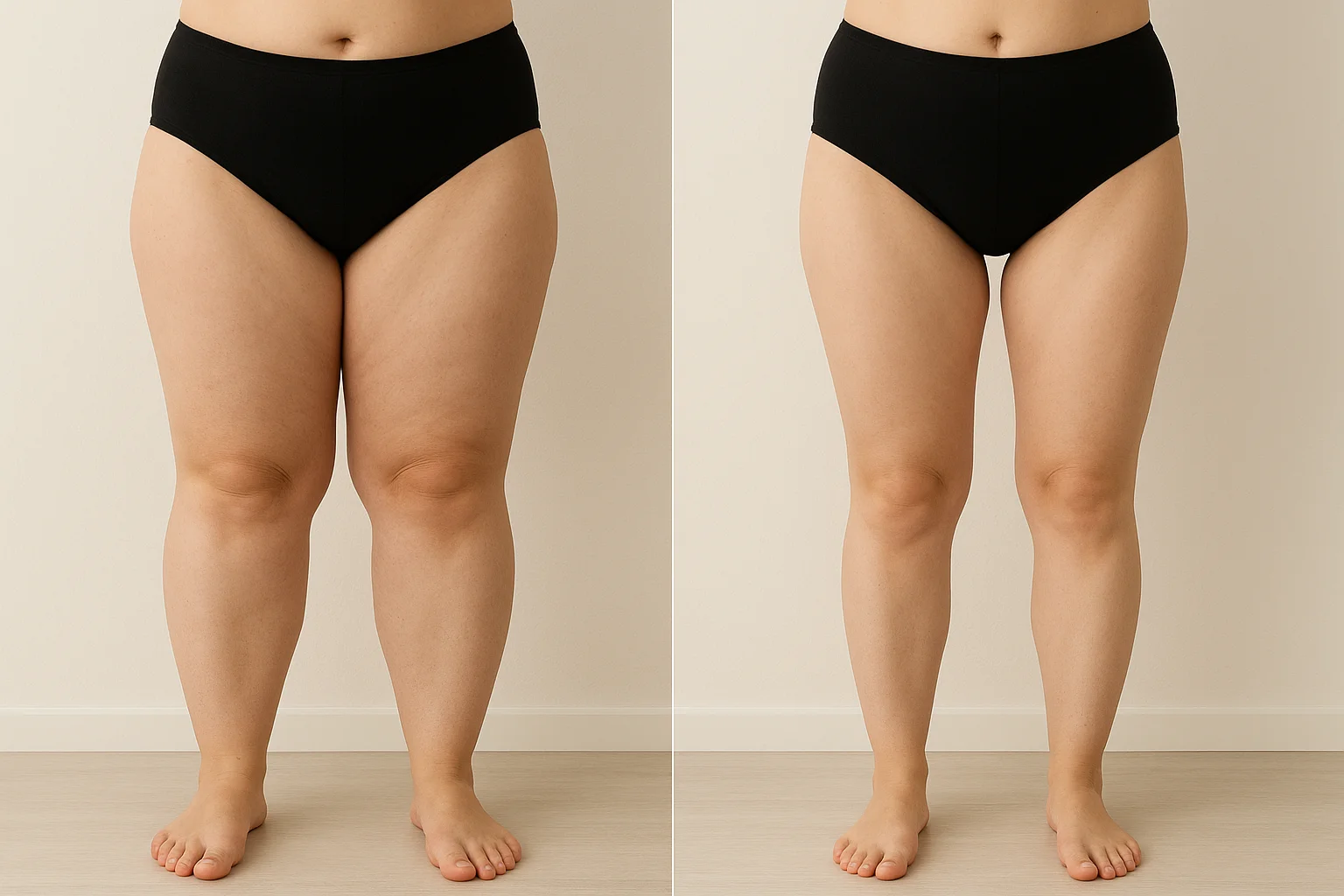
Regenerative aesthetics needs careful language
PRP and PRF are increasingly discussed in aesthetic medicine, particularly on social media.
Both are autologous blood-derived preparations, but they are not identical.
The important question is not whether a treatment is called “regenerative.” It is whether there is credible evidence for the specific outcome being promised.
What is PRP?
Platelet-rich plasma is produced by processing a patient’s blood to concentrate platelets in plasma.
It has been studied in multiple medical and aesthetic applications.
What is PRF?
Platelet-rich fibrin is another autologous preparation with different processing characteristics and a fibrin matrix.
The protocols marketed under these names can vary, which makes it important to ask exactly what is being used and for what purpose.
What can patients realistically expect?
Research has investigated PRP and related preparations for skin quality and other indications.
Results are not uniform, and these treatments should not be represented as equivalent to a facelift or as guaranteed collagen replacement.
What I would ask before treatment
- What specific problem are we treating?
- What evidence supports this indication?
- How is the product prepared?
- How many treatments are usually recommended?
- What alternatives have stronger evidence?
- What outcome should I realistically expect?
Why this matters
The word “regenerative” can sound more definitive than the science actually is.
Good medical communication should distinguish a plausible biological mechanism from a clinically proven outcome.
The bottom line
PRP and PRF may have a place in selected treatment plans, particularly when the goal is improving skin quality rather than mechanically lifting significant tissue laxity.
They should be discussed with both their potential and their limitations.
What the evidence actually shows
A 2025 systematic review of PRP and PRF for facial rejuvenation included 20 studies and 514 patients. The proportion of studies reporting significant improvement varied substantially by endpoint: findings were more consistently favorable for skin thickness and elasticity than for wrinkles, texture, dyschromia or hydration. PubMed: PRP/PRF systematic review
A separate 2024 overview of systematic reviews emphasized methodological limitations in the evidence base. PubMed: PRP overview of systematic reviews
This matters because PRP and PRF protocols are not perfectly standardized. Preparation, concentration, activation, injection technique, treatment frequency and outcome measurement can differ.
The honest conclusion is “promising but heterogeneous,” not “proven collagen regeneration.”
Educational information only. Individual treatment decisions require a qualified physician.